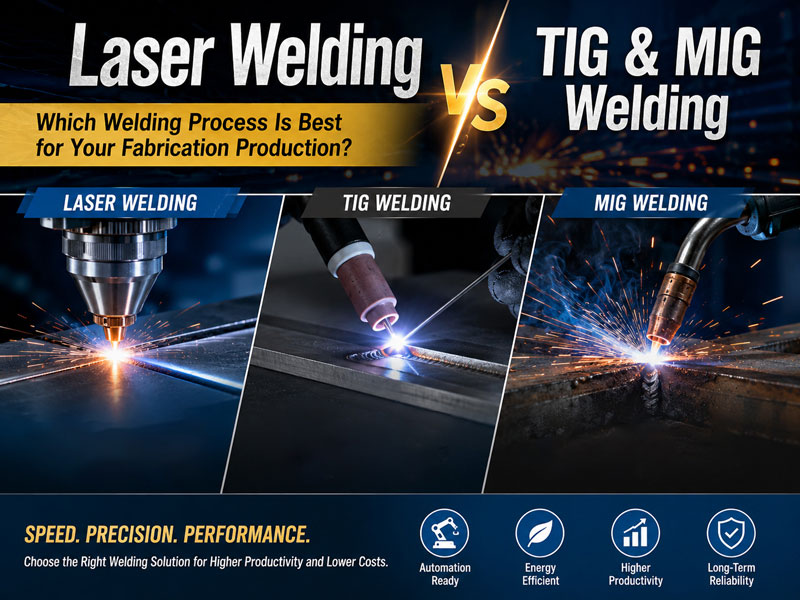
Handheld fiber laser welding machines offer higher welding speeds, precise heat control, smooth weld seams, and reduced post-processing compared with traditional TIG and MIG welding, making them an efficient solution for modern sheet metal processing.
As the metal fabrication industry continues to pursue higher productivity and better weld quality, handheld fiber laser welding machines are becoming an increasingly popular solution for sheet metal processing. Compared with traditional TIG and MIG welding, handheld laser welding offers faster welding speeds, concentrated heat input, and reduced post-welding work, helping manufacturers improve overall production efficiency.
Why Laser Welding Is Gaining Popularity in Sheet Metal Processing
Sheet metal fabrication involves a wide range of materials and applications, including stainless steel cabinets, kitchen equipment, metal doors and windows, machinery components, automotive parts, and customized metal structures.
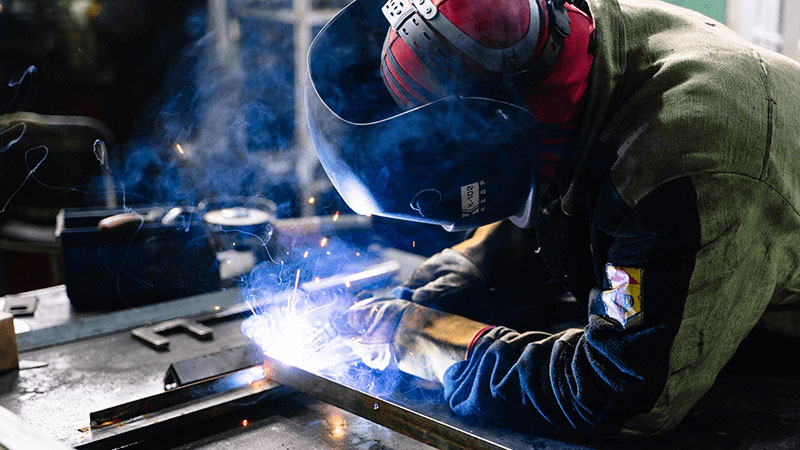
Traditional welding technologies remain widely used, but many manufacturers face challenges such as relatively slow welding speeds, large heat-affected zones, material deformation, and extensive grinding or polishing after welding.
A handheld fiber laser welding machine addresses many of these challenges by concentrating high-energy laser radiation precisely on the welding area. The focused energy creates a narrow and controlled heat-affected zone, allowing the workpiece to be welded efficiently while minimizing unnecessary thermal damage.
Higher Welding Speed Improves Production Efficiency
Welding speed is one of the most important factors affecting productivity in sheet metal fabrication.
Compared with conventional TIG welding, handheld laser welding can achieve significantly higher welding speeds in suitable applications. The faster process can reduce the time required for each workpiece and increase production capacity, particularly in repetitive sheet metal operations.
Higher welding speed also helps manufacturers reduce labor requirements per workpiece and improve production flexibility.
Actual welding speed depends on factors such as laser power, material type, material thickness, joint design, shielding gas, and welding parameters. Proper parameter selection is therefore essential for achieving stable and efficient results.
Lower Heat Input Helps Reduce Deformation
Excessive heat input can cause deformation, discoloration, and other problems during sheet metal welding.
Fiber laser welding uses a highly concentrated laser beam to deliver energy directly to the welding zone. Compared with conventional arc welding processes, the concentrated heat source can help reduce the size of the heat-affected zone.
For thin and medium-thickness sheet metal, reduced thermal input can help maintain better dimensional accuracy and surface appearance.
This makes handheld laser welding particularly attractive for applications where both welding strength and visual quality are important.
Smooth Weld Seams and Less Post-Processing
Another advantage of handheld fiber laser welding machines is the potential to reduce post-welding processing.
With appropriate welding parameters and operating conditions, laser welding can produce relatively smooth and consistent weld seams. In many applications, manufacturers can reduce the amount of grinding and polishing required after welding.
Less post-processing means fewer production steps, lower labor consumption, and a shorter overall manufacturing cycle.
For manufacturers processing large numbers of sheet metal products, even a small reduction in finishing time can have a significant impact on production efficiency.
Easy Operation and Flexible Welding
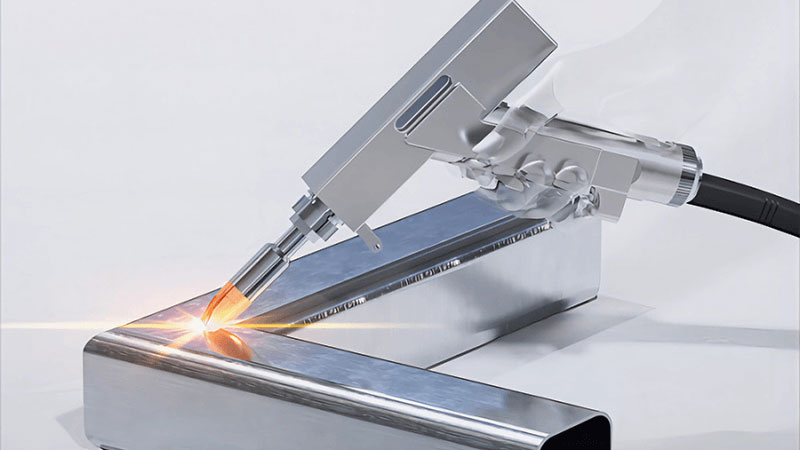
Handheld laser welding equipment is designed to provide greater flexibility for different workpieces and welding positions.
The handheld welding gun allows operators to move around the workpiece and access areas that may be difficult to reach with fixed welding equipment. The flexible operating method is suitable for small-batch production, customized fabrication, equipment maintenance, and other applications requiring frequent changes between workpieces.
Modern laser welding systems can also integrate functions such as wire feeding and parameter presets, helping operators achieve more consistent welding results.
Handheld Laser Welding vs. Traditional Welding
The differences between handheld laser welding and conventional welding can be summarized as follows:
| Feature | Handheld Fiber Laser Welding | TIG Welding | MIG Welding |
| Welding Speed | High | Low | Medium |
| Heat Input | Concentrated | Relatively high | Relatively high |
| Heat-Affected Zone | Small | Larger | Larger |
| Weld Appearance | Smooth and precise | Good | Good |
| Post-Processing | Often reduced | Usually required | Usually required |
| Operation | Flexible | Requires high skill | Moderate skill |
| Production Efficiency | High | Lower | Medium |
The actual advantages vary according to the application, material, thickness, equipment configuration, and welding parameters. However, for many sheet metal applications, handheld laser welding can provide a more efficient alternative to traditional welding processes.
A More Efficient Solution for Modern Metal Fabrication
The shift toward efficient and flexible manufacturing is accelerating the adoption of laser technology in the metal fabrication industry.
A handheld fiber laser welding machine combines high-speed welding, concentrated heat input, flexible operation, and excellent weld appearance in a compact system. For manufacturers looking to improve sheet metal processing efficiency, laser welding provides an opportunity to reduce production time and simplify downstream finishing processes.
As fiber laser sources and intelligent control technologies continue to develop, handheld laser welding is expected to become an increasingly important solution for modern metal fabrication.For manufacturers seeking higher productivity, better weld quality, and greater production flexibility, upgrading from traditional welding to a handheld fiber laser welding machine can be an effective step toward more efficient metal processing.