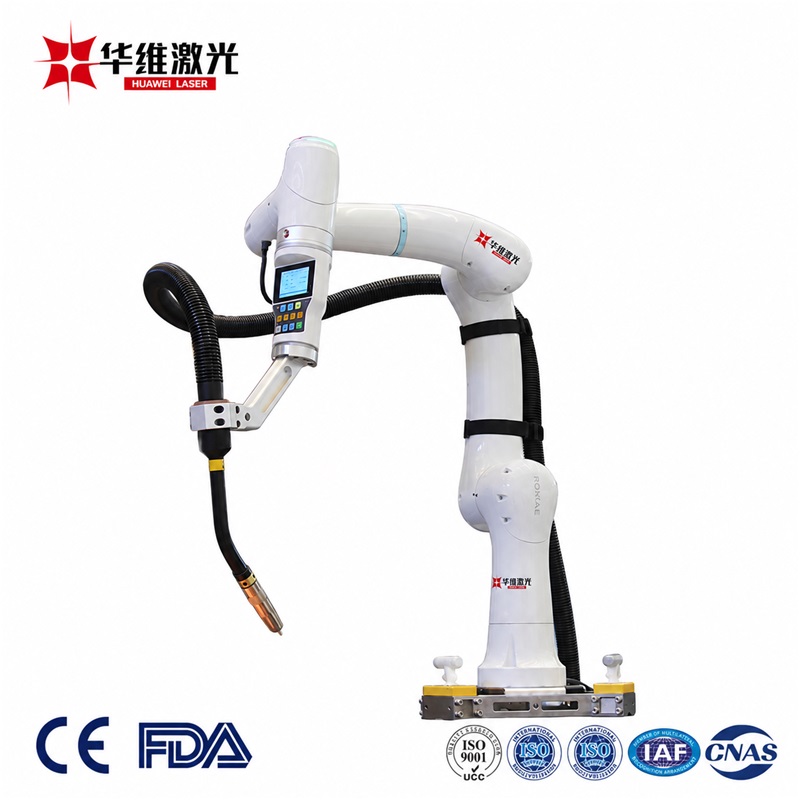
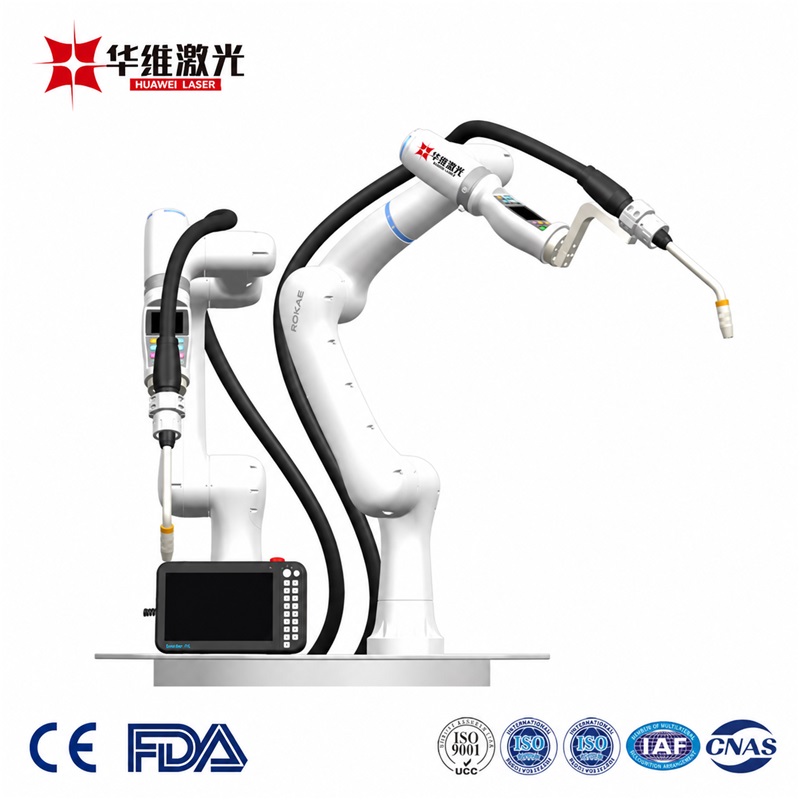
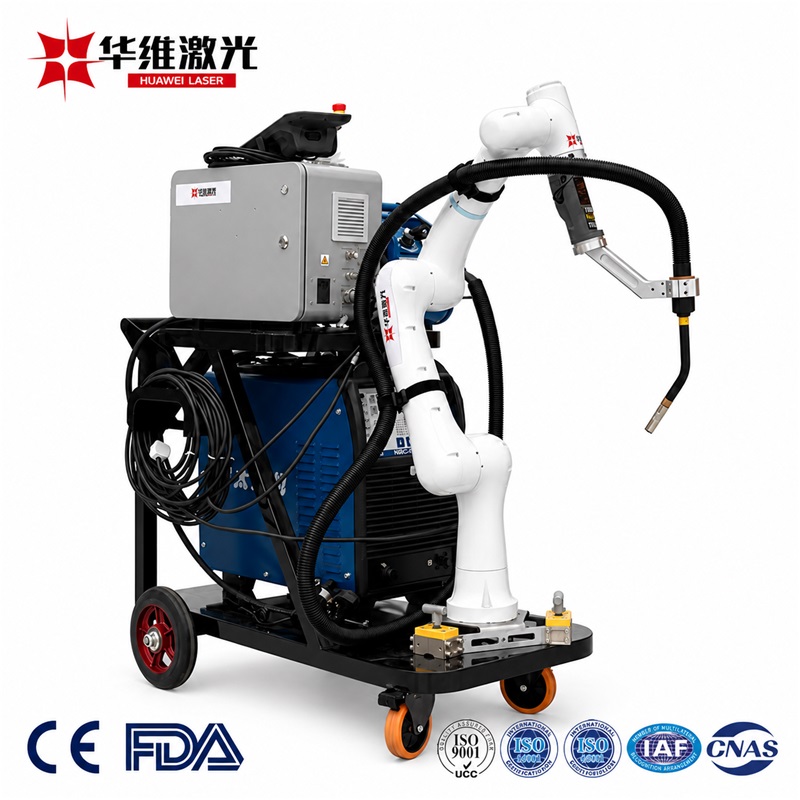
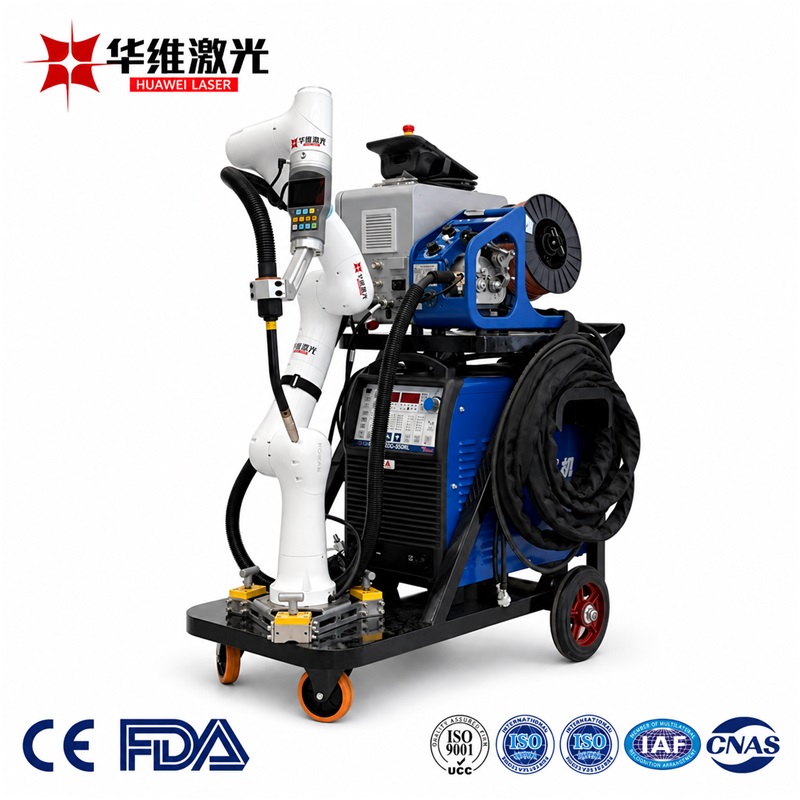

The HW-CRW-919 Collaborative Welding Robot is designed to make robotic welding more accessible to manufacturers. With drag-to-teach programming, intelligent welding functions, and flexible workstation options, it helps simplify setup for suitable applications, improve welding consistency, and adapt to small-batch and multi-product production. Backed by application assessment, sample welding, operator training, and ongoing process support, HUAWEI LASER provides a practical path toward welding automation.
Make Robotic Welding More Accessible to Your Workshop
- Intuitive Drag-to-Teach Programming
- Intelligent Welding Assistance
- Flexible Small-Batch Production
- Integrated Welding Workstation Solutions
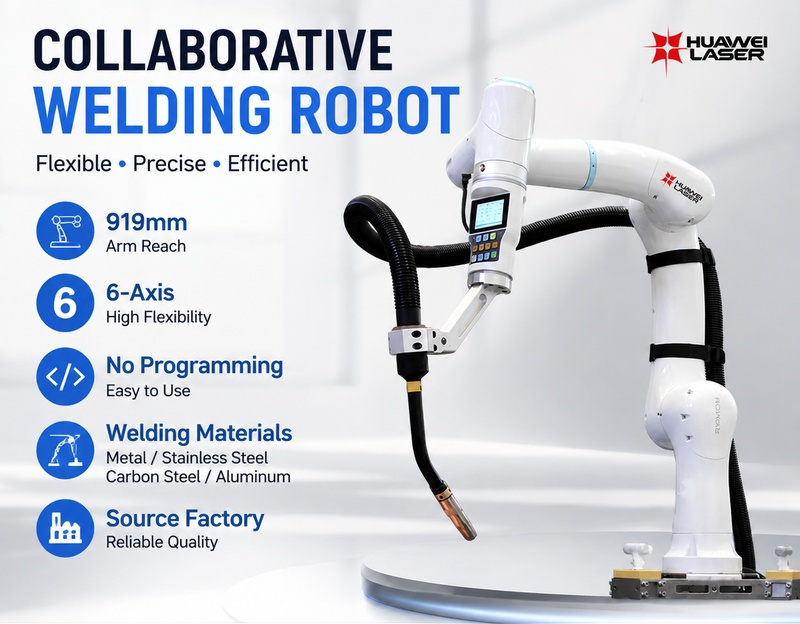
6 Key Advantages
1. Collaborative Operation for Flexible Workspaces
Designed for flexible deployment in suitable production environments, the collaborative robot can support welding automation without necessarily requiring a conventional fully enclosed industrial robot cell. Actual safeguarding requirements depend on the complete application and risk assessment.
2. Drag-to-Teach Programming
Guide the robot arm along the required welding path to simplify teaching for supported applications. This intuitive approach can reduce reliance on complex manual programming and help operators get started more easily.
3. Consistent Welding Quality
Repeat configured welding paths and parameters to support uniform weld seams. The system is designed to help reduce variations associated with repetitive manual operations, with results depending on workpiece preparation and process settings.
4. Flexible and Efficient Production
Adapt suitable welding workflows to small batches, customized orders, and different workpiece types. Flexible setup options help manufacturers respond to changing production requirements.
5. Compact Design and Convenient Deployment
The lightweight robot models offer options for different workspace and payload requirements. Suitable configurations can help make installation and movement between work areas more convenient.
6. A Practical Investment in Welding Automation
Evaluate robotic welding for repetitive tasks without immediately redesigning the entire production line. The appropriate solution depends on application requirements, system configuration, and expected production benefits.
Product Showcase
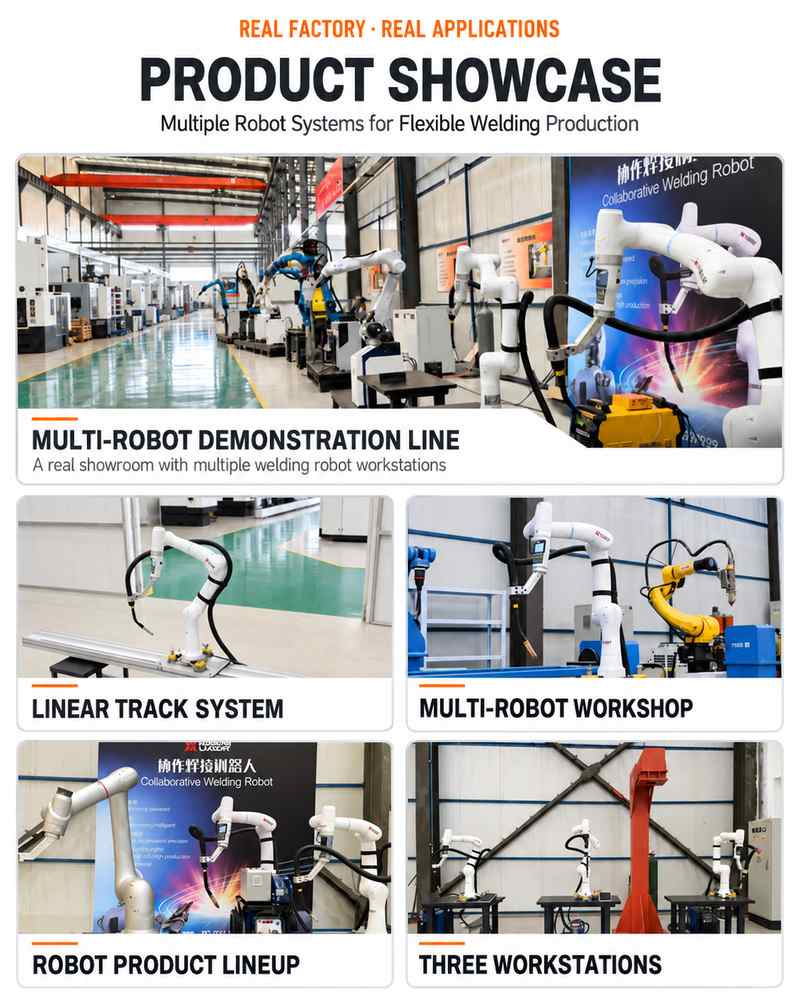
From Drag Teaching to Automated Welding

Step 1 — Position the Workpiece
Prepare the workpiece and fixture according to the required joint position and welding process.
Step 2 — Teach the Welding Path
Use the supported drag-to-teach method to guide the robot along the required path.
Step 3 — Configure Welding Parameters
Select suitable welding parameters and process settings for the material, thickness, and joint.
Step 4 — Test the Weld
Inspect the sample weld and adjust the setup as required to meet your quality standards.
Step 5 — Start Production
Run the validated welding program and follow the established operating and quality-control procedures.
Designed for Easier Adoption
The system is intended to simplify the learning process for suitable applications. Operator training and process validation remain important for safe, consistent production.
Specification
| Specification | HW-CRW-919 | HW-CRW-1434 |
|---|---|---|
| Rated Payload | 5 kg | 12 kg |
| Working Radius | 919 mm | 1,434 mm |
| Repeatability | ±0.03 mm | ±0.03 mm |
| Max. End-Effector Speed | ≤ 2.0 m/s | ≤ 3.0 m/s |
| Robot Weight | 16.5 kg | 41 kg |
| Protection Rating | IP54 | IP67 |
Optional Configuration
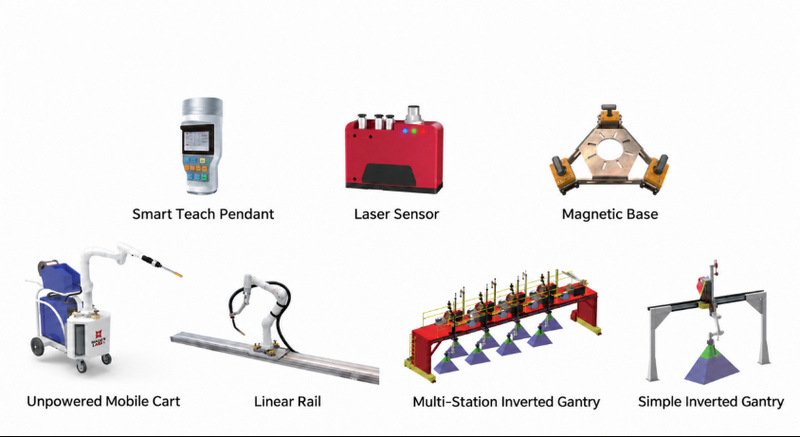
Frequently Asked Questions
Does the collaborative welding robot require professional programming skills?
The drag-to-teach function is designed to simplify path teaching for supported applications and reduce reliance on complex manual programming. The required training depends on the application and system configuration.
Can the robot handle different workpieces?
It can support different jobs when suitable welding paths, fixtures, and parameters are configured. Changeover effort depends on workpiece design and the selected workflow.
Can it perform multi-layer and multi-pass welding?
The brochure lists multi-layer and multi-pass welding path planning as a feature. Confirm the compatible welding process, joint requirements, and configuration for your specific application.
Can I test my workpieces before purchasing?
HUAWEI LASER promotes workpiece welding trials as part of its service offering. Contact our team to confirm sample requirements, availability, and arrangements.